
As an Amazon Associate, I earn from qualifying purchases. That means I earn commissions from my sponsored links or I make money when readers (you) purchase items through my links. Your purchase allows me to continue working as a stay-at-home dad who moonlights as a farmer and a musician. Needless to say, this post contains affiliate links.
I was still half-asleep when I felt Lyle’s small hand tugging at my arm, and then a tiny, sleepy voice said, “Daddy, we have to go see Mommy. Cook breakfast.”
As if I was his hired cook.
I should be irritated but… he remembered.
My son actually remembered.
It made me real proud to know that Lyle recognized a pattern and I realized that what I had been doing for the past few weeks left a mark in his memory.
The Sunday brunches.
The drive to get mommy.
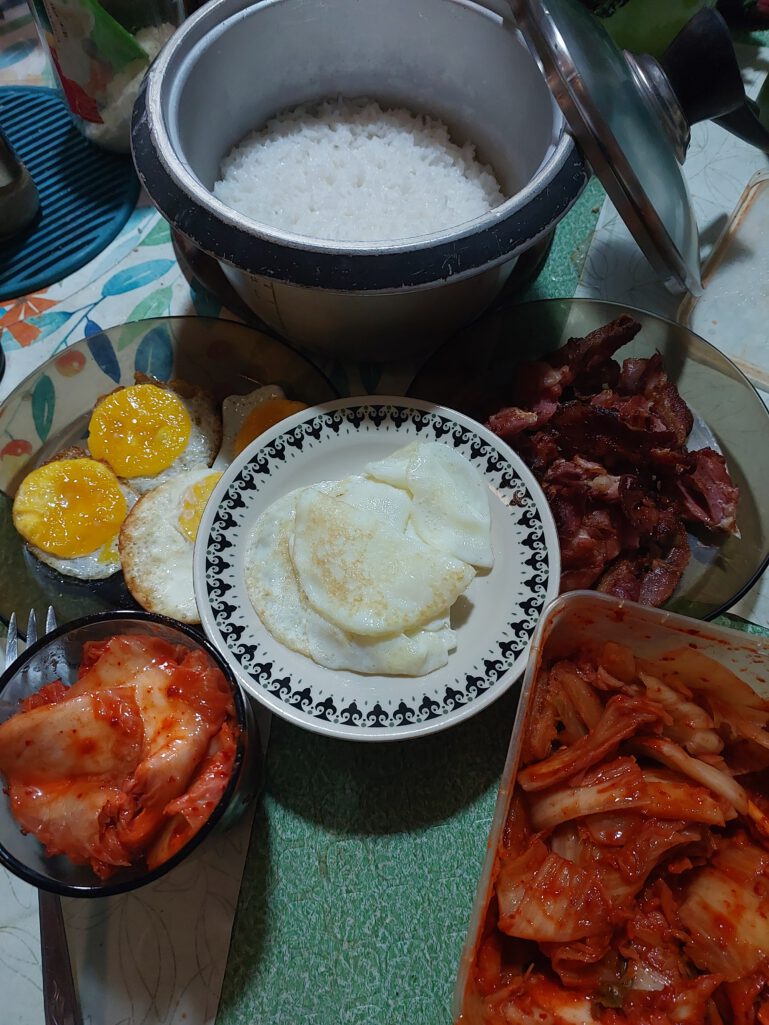
The eggs, the bacon, the rice.
It was becoming our thing.
I didn’t know what I was doing.
There’s no roadmap for how to hold a family together because every one is unique.
I read books.
I visited websites and parenting forums at two in the morning.
I watched video after video about routines, about children and attachment, about what it means to fight for your marriage not with grand gestures, but with small, consistent, deliberate acts.
And one thing kept showing up in everything I consumed: show up.
Repeatedly.
Without fail.
So, I started showing up on Sundays.
Why Routines Matter More Than You Think
Children don’t just like routines — they need them.
According to child development research, predictable routines give children a sense of safety and control in a world that often feels chaotic and beyond their understanding. When a child knows what comes next, their nervous system relaxes. They can focus on growing, on playing, on connecting — instead of being on alert for what might change.
What routines do for children:
- Build a sense of security and trust in the adults around them
- Reduce anxiety and behavioral issues
- Strengthen memory and pattern recognition
- Teach time management and responsibility from an early age
- Create shared experiences that become lifelong family memories
My son waking me up that Sunday morning was proof of all of this.
He had internalized our ritual. He owned it.
That is the power of a routine done consistently — it stops being something you do to a child and starts being something they carry inside them.
Strengthening Your Marriage in Front of Your Children
Here’s something I didn’t fully understand until I started this journey: your child knows and understands by observing the way you treat your spouse.
I knew nothing about how to be a good husband.
I had to learn by trial and error.
And what I discovered is that it rarely happens through one dramatic conversation or one perfect dinner. It happens through the accumulation of small, steady choices — choosing kindness, choosing presence, choosing to keep showing up.
What your child learns when you prioritize your relationship:
- That love is an active, ongoing choice — not just a feeling
- How to repair and rebuild when things get hard
- What respect, patience, and tenderness look like in practice
- That commitment means something, even when it is difficult
- That their home is a safe place built on love between two people who try
Cooking brunch together on Sundays is, on the surface, just about food.
But what my son sees is his father doing things for his mother to strengthen their family. Making your wife fall in love with you shouldn’t end after she signs the marriage contract. I want to leave a very strong memory in his mind that it is important for two people to keep choosing each other ervy day.
That is worth more than any lecture I could ever give him about love.
The Quiet Power of Brunch
Brunch is not just a meal.
It is an invitation to slow life down.
On weekday mornings, everyone is running.
But Sunday brunch says: we are not going anywhere.
We are here.
Together.
For the past few weeks, I have been the one cooking —eggs, rice, sometimes we get pancakes when my son makes the special request with his best persuasion face on. Yeah, can’t say no to that monkey face.
And every week, something small but meaningful happens at that table.
A story gets told.
A laugh gets shared.
My son watches his parents be people — not just roles, not just providers, but two human beings who chose to make something together.
Every Family Goes Through Bad Times
Every family goes through bad times. No home is immune to seasons of pain, distance, and uncertainty. What separates the families that come through it from the ones that do not is not the absence of struggle — it is the response to it.
It is choosing, on a Sunday when you would rather stay in bed, to get up and cook anyway.
It is letting your child lead you out the door because he believes in the thing you started.
It is understanding that the bad times do not define your family — how you move through them does.
I did not always know what I was doing.
I still don’t, fully.
But I knew that doing nothing was not an option when the stakes were this high.
So I acted.
Imperfectly, consistently, and with everything I had.
Sacrifice Is the Foundation of a Family
Nobody talks enough about sacrifice.
The quiet kind. Not the overdramatic ones.
Getting up earlier than you want to.
Spending money on ingredients when you have nothing in your pockets.
Driving long distances on your day off because you made a promise, and promises matter.
What sacrifice teaches your family:
- That love is a verb, not just a noun
- That you are willing to be uncomfortable for the people you love
- That commitment has weight — and that weight is worth carrying
- That children deserve parents who choose the hard right thing over the easy wrong one
My son did not wake me up that morning because I told him brunch was important.
He woke me up because I showed him — week after week — that it was.
Children believe what they witness far more than what they are told.
Keeping the Family Together
The family is not kept together by the absence of problems. It is kept together by the presence of people who refuse to stop trying.
Every book I read, every video I watched, every late-night rabbit hole I went down pointed to the same truth: connection is the cure.
When you feel your family drifting, you do not fix it with one big intervention.
You fix it with a hundred small ones.
A Sunday brunch.
A question asked with genuine curiosity.
A hand extended in the middle of an argument.
I am not an expert.
I am a father and a husband who decided that the people in my life are worth fighting for — not with anger, but with consistency. With eggs on a Sunday morning. With showing up when it would be easier to stay away.
My son grabbed my hand that morning, ready to go. And as I watched him — so sure, so certain that this is just what we do on Sundays — I thought: this is it. This is what it looks like when it’s working.
So we went.
Off to see Mommy.
Just like last week.
And the week before.
And God willing, the week after that too.




1 thought on “We’re Off to See Mommy Again”