
As an Amazon Associate, I earn from qualifying purchases. That means I earn commissions from my sponsored links or I make money when readers (you) purchase items through my links. Your purchase allows me to continue working as a stay-at-home dad who moonlights as a farmer and a musician. Needless to say, this post contains affiliate links.
Fifteen years ago, I did something that I would never have done anywhere else in the Philippines.
I drank water straight from the tap.
Any other place and I would not have dared to even let that glass touch my lips after filling it up from the faucet.
But this was Davao.
And my cousin told me the water was safe.
So I took a leap of faith… filled up a glass, drank it, and then waited.
Waited for my stomach to complain.
Readied myself to rush to the nearest comfort room for some er… comfort.
Nothing happened.
That was the beginning of a quiet kind of trust I built with this city.
Davao, of all the places I had lived, gave me clean water straight from the tap.
And for at least five years after that, I drank it without a second thought.
Cabantian’s Cloudy Water Supply
That trust was tested sometime around 2015 to 2016 when I moved to Cabantian.
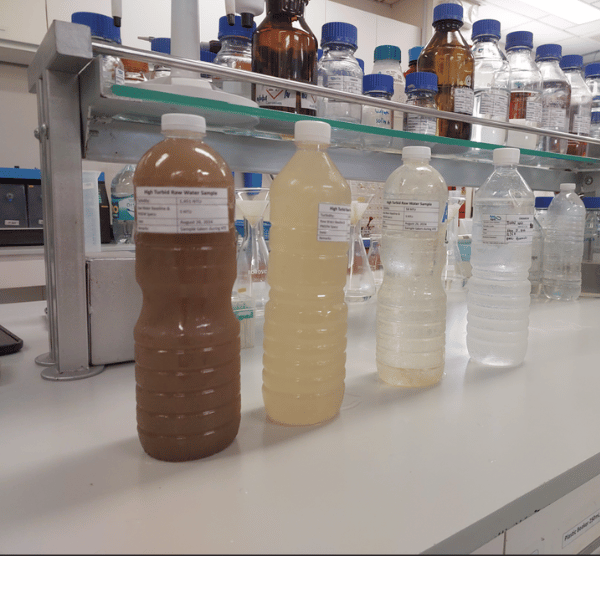
The water from the tap was cloudy.
That slightly off color made me pause and rethink my stance on drinking straight from the tap.
Even my rice was yellow because of the water.
There would be chalky sediment hanging on my bucket of water for bathing.
Yeah… Cabantian had a water problem back then.
So I began buying water in large containers.
I didn’t dare drink water from the tap even after I left Cabantian… from that point on, for ten years, I went back to buying bottled or filtered water like everyone else.
I stopped trusting the tap.
The Apo Agua Visit
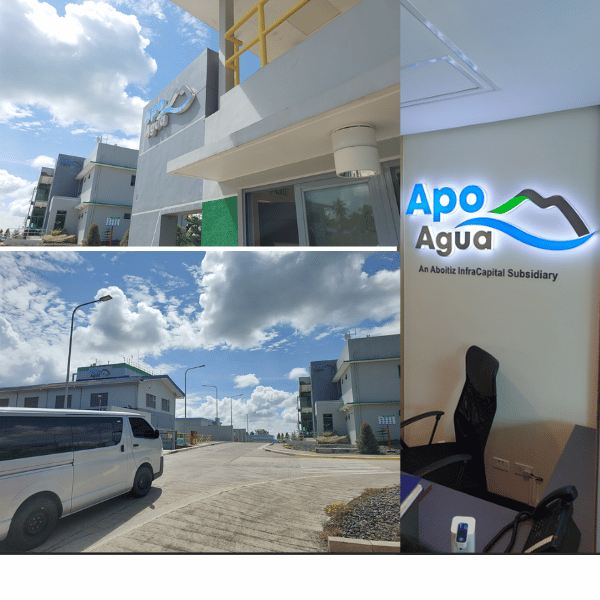
Then came the invitation to visit the Apo Agua facility as part of the Davao Bloggers Society. And I said yes, mostly out of curiosity.
What made it even more memorable was the timing.
The visit happened on Eid’l Adha, a day of solemnity and reflection for our Muslim brothers and sisters.
There was something quietly ironic about that… starting the morning in that spirit of gratitude and sacrifice, then being transported about an hour away into the mountains where water fell at a frightening, deafening rate all around us.
And I mean deafening.
It made conversation almost impossible as the water’s volume physically and sonically increased. Everything was replaced with… awe.
About how little we are.
How fragile
And how nature presents itself in various forms
And despite my fear of heights… (a recent development…) I also walked the narrow catwalk while water fell in stages.
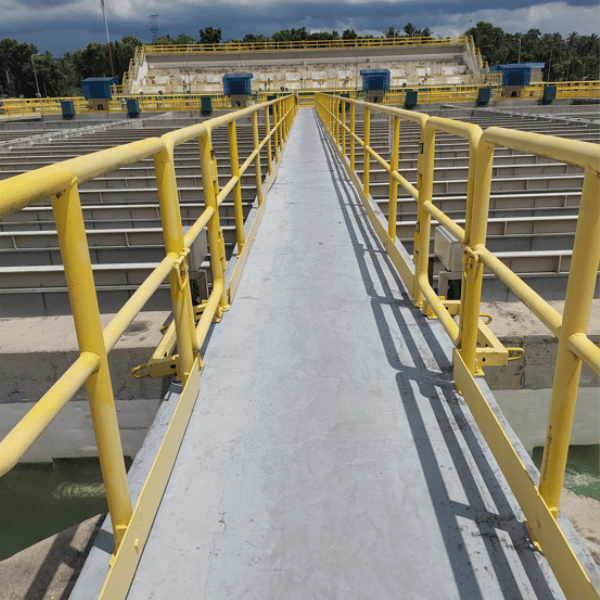
I gripped my camera like my life depended on it, which I felt it did, and I walked across it anyway because that’s what you do when you’re a blogger on a tour and everyone else is walking across it too.
You smile.
You take the photo.
You pretend your knees are not shaking or knocking together.
But even through the slight terror… I was paying attention.
Because what they were showing us was genuinely important.
Water, Water Everywhere
For most of Davao’s history, over 98% of the city’s water came from groundwater, drawn from deep wells beneath the city.
And as far back as 1998, a JICA study had already warned that this was unsustainable.
The study flagged that by 2025, water demand from Davao’s rapid growth would outpace supply, and that over-extraction from aquifers risked saltwater intrusion into the wells.
Somebody read that report.
And somebody did something about it.
The answer was the Davao City Bulk Water Supply Project, or DCBWSP, a public-private partnership between the Davao City Water District and Apo Agua Infrastructura, Inc., a subsidiary of Aboitiz InfraCapital.
Together they built what is now the largest operating private bulk water supply facility in the Philippines.
The source of that water is the Panigan-Tamugan River up in the mountains of Marilog District. River water, carefully treated, is what now flows to most Davao taps.
As of June 2025, 78% of Davao City’s daily water supply comes from this project. DCWD now distributes an average of 373,000 cubic meters of water per day, and 95.52% of the 1.3 million Davaoeños connected to the system enjoy 24-hour, 7-day water availability.
373,000 cubic meters.
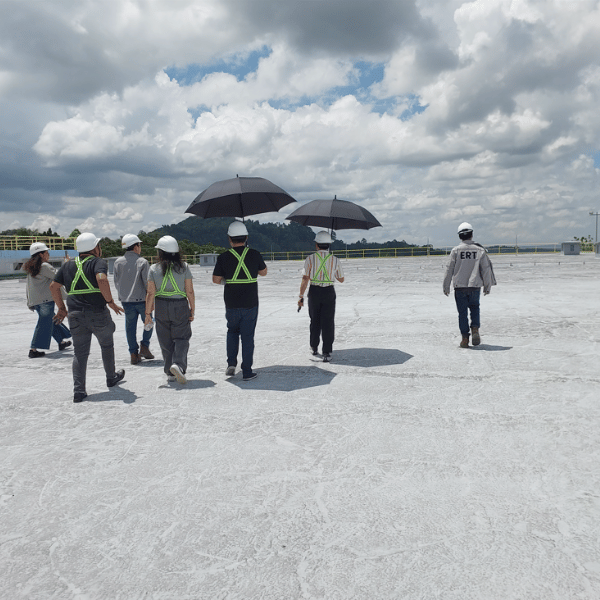
Every single day.
That’s water for over a million people… and most of them probably have no idea where it comes from or what it took to get it there.
HydroElectric Power, Anyone?
The Apo Agua treatment plant runs on hydroelectric power generated by the river itself.
It is the first facility in Southeast Asia to use this water-energy nexus concept, where the river powers the plant that treats the river’s water.
And from there, the treated water is distributed through a gravity-fed system, meaning no energy-intensive pumping is needed to push water down to the city.
The river powers the plant. Gravity does the distribution. The whole thing is essentially self-sustaining in terms of energy.
That is remarkable engineering.
Not just for the Philippines.
For Southeast Asia.
The facility can deliver up to 300 million liters of treated water per day. And that’s mostly powered by hydroelectric energy.
The Questions I Asked
I had two things on my mind during the tour that went beyond the standard briefing.
The first was about the unprocessed water.
When you treat surface water, there is byproduct… sediment, filtered material, what the process removes. I asked what happens to it.
They told me it goes back to the farmers.
That was reassuring.
Nothing wasted.
The water that doesn’t make it through treatment doesn’t just disappear, it goes back into the agricultural system.
But it made me wonder… is there a future where Apo Agua could partner with the National Irrigation Administration to extend that reach further?
Where the water management in Tamugan and Marilog could also directly support the farms downstream in a more formalized way?
I don’t have an answer to that.
But I think it’s a conversation worth having, especially as the city grows and food security becomes as important as water security.
The second thing I asked about was the wildlife and the trees.
The Tamugan area is not just a water source.
It’s a watershed.
It’s forest.
It’s habitat.
I wanted to know if the construction and operation of the facility had affected the flora and fauna in the area.
The answer was that they actively protect it.
Apo Agua runs reforestation and watershed protection programs in their host communities, as well as river clean-up initiatives along the Tamugan River.
They’re not just taking water from the mountain. They’re investing in keeping the mountain healthy enough to keep giving water.
That’s the only way this works long-term.
Where the trees stay, the water stays.
Where the water stays, the river stays.
Where the river stays… Davao stays supplied.
What This Means to Me as a Father
I have a son. And like any parent, the thing I think about most is not what Davao looks like today but what it will look like when he’s older.
Will there be enough water?
Will it be clean?
Will he be able to fill a glass from a tap without worrying about what’s in it?
A resident from Cabantian said that the water used to be their main problem. Now it’s clear enough to soak white clothes in.
They can finally do laundry properly.
Cabantian.
That’s where I stopped trusting the tap in 2015.
And here’s a resident from the same area saying the water is now clean.
After a decade.
I think I’m ready to trust it again.
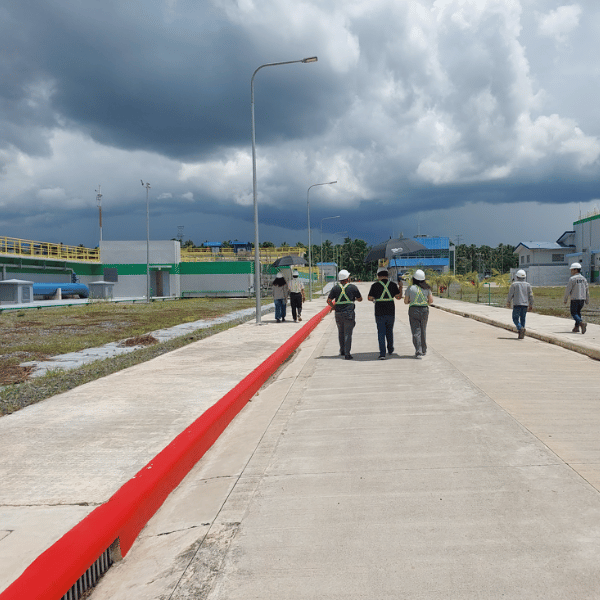
Davao City, life is indeed here.

And where clean water is… life will keep thriving.
So yeah…
Ampingan nato ang Panigan-Tamugan.
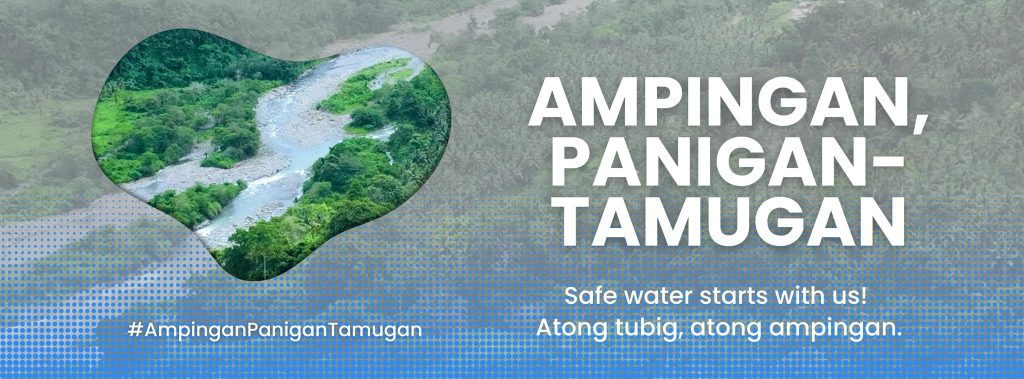
Let’s take care of it.
For our kids.
For our city.
For whoever comes next.Want to learn more? Visit apoagua.com or follow them on Facebook at @ApoAguaInfra